8 Types of Content Marketing to Try for Your Small Business
- Rachel Meyer

- Jul 8
- 7 min read

It's quiz time. Which of the following is considered content marketing?
A) Writing blog posts
B) Sending marketing emails
C) Posting Instagram reels
D) Making educational YouTube videos
E) All of the above
If you answered E, you're correct! Content marketing is an umbrella term for a lot of different strategies that all relate to posting content online in order to grow your business.
Think of it like exercise. You could do Pilates, yoga, or weight lifting and still be working out. They're just different methods of getting a strong, capable body.
But understanding all the varieties of content can be difficult, much less knowing which ones you want to use. That's why I'm breaking down the different types of content marketing you can use for your small business in this post. We'll look at the benefits of each one and a few of the tools you'll need, so you can make an educated decision on which ones to focus on.
Types of content marketing

Blogging
Benefits: Evergreen content, website ranking, showcasing products
What you’ll need: A website blog section, a content calendar, CRM
Blogs are one of the most classic forms of content marketing and are probably what you think of when I say "content". You post them on your website to educate or entertain readers and attract new customers to your website.
As a content writer, I’m rather partial to blog posts. A lot of people on the internet think they're dead with the introduction of AI search, but where do you think AI is getting the content? On top of that, people are searching more questions than ever. 9 times out of 10, they'll end up reading a blog post to answer that question or get advice.
This gives you the perfect opportunity to position yourself as a topic authority in your market and share value with potential customers. The best part is that great blog posts can bring in traffic for years to come, especially if you keep them up to date.

Videos
Benefits: Evergreen content, visual learning, building trust
What you’ll need: A camera, video editing software, microphones, lighting
YouTube has become a search engine in its own right. Many people go straight there when they have a question they need answered. Videos also feature prominently in search, putting more eyes on your content.
Videos are basically a visual version of blog posts. They can entertain, educate, and are great for getting people into your sales funnel. Like blog posts, a good video can remain relevant for years to come, giving you way more bang for your marketing bucks.
The downside of video is that it takes a lot more effort and skill. Learning editing software or sound mixing isn't for everyone. Plus, you may find you hate being on camera. But those who excel at video are seeing a lot of success right now as people move away from short-form content.
Benefits: Driving sales, building relationships, sharing value
What you’ll need: An ESP, email templates, content, a sign-up form
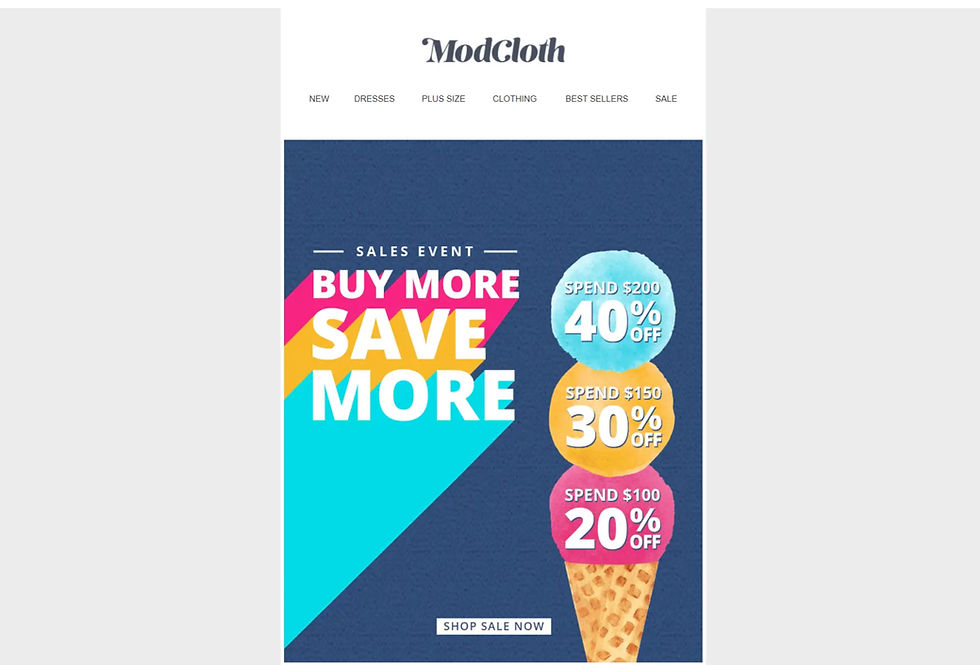
Email is an amazing tool because it gives you direct access to your customers. When they read a blog post or watch your TikTok, they're coming to you. But when you send them an email, you're going straight to them.
If you only pick one strategy on this list to try, it should be this one. I know there's a lot of negativity in the small business space toward email, but it doesn't have to be spammy or annoying. You can send consistent emails to your subscribers, build relationships, and see results without overwhelming or irritating your customers.
Email can be a bit more technical than some of the other items on this list. Things like email design or managing your ESP have a learning curve. But the benefits it holds far outweigh the initial educational cost.
Email is so powerful, it's a marketing tactic in its own right. I could keep going on about it, but I suggest checking out this post if you want to learn more.


Social Media
Benefits: Building awareness, converting leads
What you’ll need: Social media accounts, content calendar, video editor, b-roll
A lot of people invest in social media these days. Platforms like Instagram and TikTok are huge sources of traffic and income for many businesses. They're a great way to build brand awareness and connect with your ideal customer.
But there are a lot of drawbacks to social media. The biggest is that you don’t own your audience. If Instagram disappears tomorrow, all those people are just gone. You can't say the same thing for email subscribers or website visitors.
Then there’s the time investment. These platforms reward constant interactions and new content. It's a never-ending loop of creating, editing, posting, and doing it all again tomorrow. Not everyone has this kind of time, nor should they spend the time they have on something that won't bring the results they're looking for. So while I think social media can be worth having, it shouldn’t be your top focus.

Podcasts
Benefits: Audience connection, building authority, driving traffic
What you’ll need: Recording equipment, soundproofing, audio editor, transcriptions
Podcasts are getting more and more popular. People love listening to them while they drive, clean, or walk, making them perfect for building connections with your audience. It's like a video, but without you having to be on camera.
Like videos and blog posts, they also allow you to establish yourself as an authority in your market. You can share all your industry insights and knowledge in a format that feels like chatting with a friend on the phone. You can even reuse your videos, blog posts, and podcasts to make content for the others, such as turning your podcast transcript into a blog post for people who prefer to read.
The downside is that producing a good podcast does require some skill and knowledge, like with video. You might not be on camera, but you still need quality sound and know-how to produce your episodes.

Whitepapers
Benefits: Establishing authority, product information
What you’ll need: Statistics and metrics, research, graphic design
Whitepapers are a tactic you might not be familiar with if you’re not in the B2B space. These papers contain in-depth research on a particular topic that you've found a problem with and a solution to.
The biggest benefit of whitepapers is their original content. You gather and curate this formation, meaning people can't find it anywhere else. And to get it, they often have to share their email, helping you build your email list.
I'll admit, I'm not very familiar with this type of content marketing. I've never worked with companies that needed them. But I understand they can be quite valuable for many businesses. If you want to learn more, check out this post by HubSpot.

Case Studies
Benefits: Customer trust, showing authority
What you’ll need: Customers, statistics, before-and-after results
Case studies are similar to whitepapers, but instead of showing your insight on a topic or problem, they share your ability to solve customer problems. For example, I have a case study on my blog about how I helped a local author redo her website to better align with her brand.
It's kind of like an ad for your business, but without you saying "buy my stuff". Instead, you paint a picture for your customers, showing them how you can take those problems they're facing and fix them. Not only do you show them what you can do, but you also show them you've done it before, adding a layer of social proof.
Case studies don’t work for every business. They're best for service-based businesses that want to share their work's value tangibly. It's easier to use them for a styling business than a clothing company.

UGC
Benefits: Building trust, customer relationships, done-for-you content
What you’ll need: Customer reviews, testimonials, permission
User-generated content, or UGC, is where you share real customers' reviews and testimonials with your audience. They're great content to include in your social media feed, email campaigns, or website pages.
They're also amazing for building trust between you and your customers. It says, “Look, other people liked this product and you will too”. This could be resharing a delighted customer's TikTok to your feed or including an adorable customer photo in your next sales email.
Best of all, you don't have to make any of this content. All you have to do is share it, with permission, of course. You can even have contests or giveaways where the entry fee is creating a piece of content or leaving a review that you can feature online.
Content marketing FAQs
What’s the best type of content marketing for my business?
This really depends on your business and customers. For example, a clothing brand might go with blogging and Instagram, while a contractor chooses to focus on podcasts and videos.
But for most small businesses, I recommend at least considering blogs and email, with social media on the side. If you have the time and resources, you can branch out from there.
How do I get started with content marketing?
You start content marketing by deciding your goals and working out from there. If you need more help, I suggest checking out the guide below.

Can I use AI for content marketing?
Technically, yes, but I strongly discourage it. While it might seem like a shortcut, using AI to make content will only lose trust between you and your customers. Plus, AI content just isn't good, and why would you want to share bad content with your audience?
Understanding the types of content marketing can be overwhelming, but I hope this guide helped you start figuring out what will work best for your business. Remember, there's no one-size-fits-all approach. It's up to you to decide what you want to focus on.
Are you interested in blogging for your business, but need someone to help you out? I would love to work with you! Click the button below to learn more about my services and set up a free call today.


Comments